 LIGHT WEIGHT |
  STEEL SAFETY TOE CAP |
  PENETRATION RESISTANT |
  SRC MAX SLIP RESISTANT |
  CME MIDSOLE |
  FUEL OIL & SLIP RESISTANT |
  SAFETY REFLECTIVE PART |
  TOE BUMPER |
  WATERPROOF |
  ANTISTATIC |
Safety shoes offer essential protection without sacrificing comfort. In today’s working environments, the need for safety footwear is growing as companies must adhere to regulations that require their use to ensure worker safety.
This guide will help you choose the right safety shoes, outlining selection criteria based on your work environment and role.
How to choose the right safety shoes?
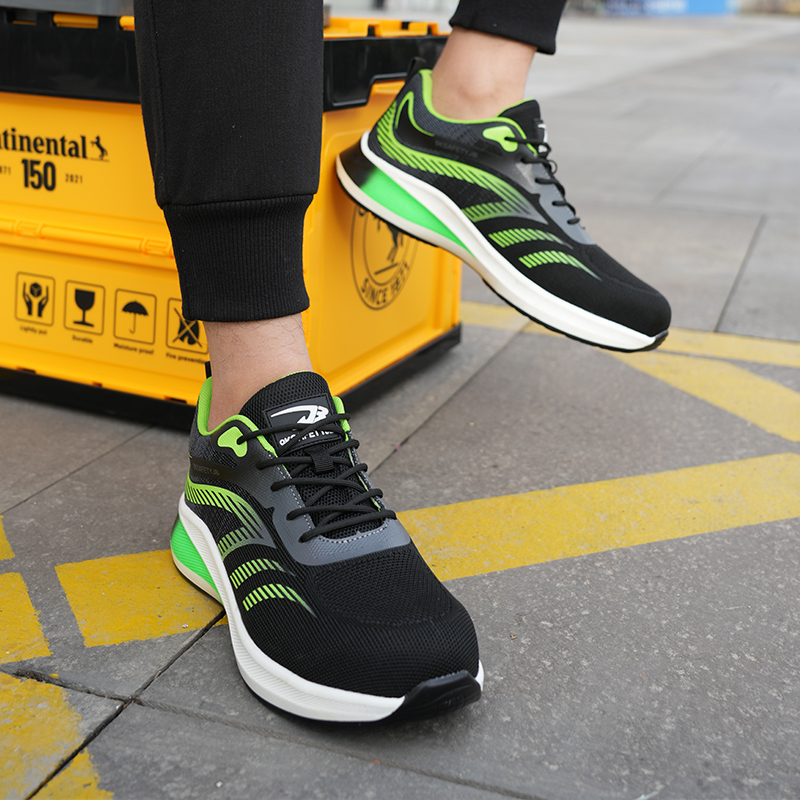
When selecting safety shoes, consider not only protection levels but also comfort and aesthetics. Pay attention to factors such as the material, shape, and whether they meet the necessary safety standards, like CE marking in Europe. Safety shoes must comply with the EN ISO 20345:2011 standard, which outlines protection levels, such as:
– Safety shoes (EN ISO 345): 200 joule impact-resistant toe cap
– Protective shoes (EN ISO 346): 100 joule impact-resistant toe cap
– Work shoes (EN ISO 347): No toe cap
Why Wear Safety Shoes?
Foot injuries account for 7% of workplace accidents. Employers are responsible for providing and maintaining safety shoes, and labor inspections can sanction employers who fail to do so. Additionally, safety shoes with ESD protection guard against electrostatic discharges in electronic work environments.
Choosing the Right Shoes

The appropriate safety shoes depend on your required level of protection, comfort, and other factors such as price. Safety shoes must include a 200-joule resistant toe cap and anti-slip, hydrocarbon-resistant soles, with additional features like perforation resistance or anti-static properties for certain industries. Consider shoe height, material (leather, fabric, or polymer), and toe cap material to optimize comfort and durability.
EN ISO 20345:2011 Standards
Safety shoes must comply with EN ISO 20345 and provide:
– 200-joule impact resistance
– Anti-slip soles for industrial environments
– Closed-back shoes
Other protection categories include:
– A: Anti-static
– Fo: Hydrocarbon-resistant soles
– E: Heel energy absorption
– P: Perforation-resistant soles
– Wru: Water-resistant upper
– Wr: Fully water-resistant
EN ISO 20345 compliant safety shoes:
| EN ISO 20345 norm categories: | A | Fo | E | P | Wru | Wr |
| SB | ||||||
| SBP | X | |||||
| S1 | X | X | X | |||
| S1P | X | X | X | X | ||
| S2 | X | X | X | X | ||
| S3 | X | X | X | X | X | |
| S4 (S2 + polymeric materials) | X | X | X | X | X | |
| S5 (S3 + polymeric materials) | X | X | X | X | X | X |
Work Environment Considerations
For environments like construction sites, food industries, or labs, different safety shoe categories (S1, S2, S3, etc.) offer specific protections based on risk factors like water, perforation, or chemical exposure.
Make sure the shoes you select align with your specific job requirements and the risks of your work environment.
EN ISO 20347 compliant work shoes:
| Work shoes (EN ISO 20347) | 1 | 2 | 3 | 4 | 5 | Corresponding protection |
| Protective boots | X | X | ||||
| Closed back | X | X | X | X | X | |
| Hydrocarbon-resistant soles | X | X | X | X | X | Fo |
| Anti-static | X | X | X | X | X | A |
| Shock and energy absorbing heel | X | X | X | X | X | E |
| Upper part of the shoe resistant to water penetration and water absorption | X | X | Wru | |||
| Anti-perforation soles with crampons | X | X | P | |||
| Electrical resistance lower than 100kW | C |